Quick Information
ADDRESS
Harder Kulm, 3800 Unterseen, Switzerland
RECOMMENDED DURATION
5+ hours
Timings
09:10–20:10
VISITORS PER YEAR
650000
TICKETS
From $22.95
UNESCO YEAR
2007
Did you know?
Harder Kulm's funicular, inaugurated in 1908, is not just a mode of transport; it's a living piece of history, providing a charming journey with panoramic views for over a century.
Harder Kulm offers special evening funicular rides, allowing visitors to witness the transition from daylight to the magical twilight, creating a unique and enchanting experience.
The Swiss believe that Harder Kulm is the home of a benevolent mountain spirit named 'Bartholdi.' Locals often share tales of his presence, adding a touch of folklore to the mountain's allure.
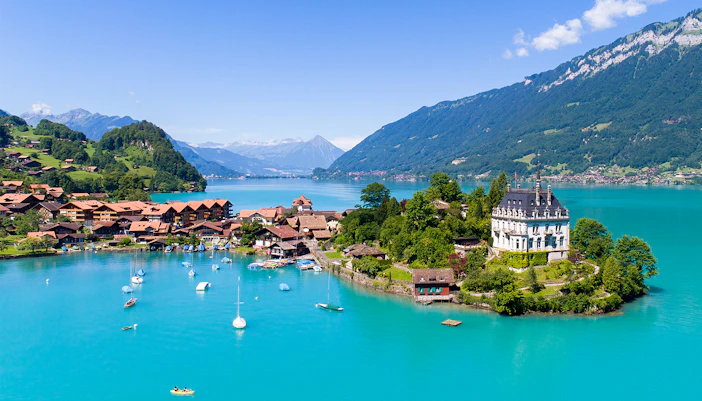
From Interlaken, Harder Kulm feels almost improbable: a short walk from the station, a steep little funicular through the trees, and suddenly the town, two lakes, and a wall of Alpine peaks open up at once. The payoff arrives fast, which is part of the charm.
Harder Kulm was built as an excursion mountain rather than a transport link. Since the railway opened in 1908, the whole experience has been designed around one idea: getting ordinary travelers to a dramatic panorama with very little effort, then letting them linger over the view.
The emotional payoff is clarity. You leave with the feeling that Interlaken’s geography has clicked into place in a single frame — Lake Thun, Lake Brienz, and the Eiger, Mönch, and Jungfrau beyond.
Skip it if low cloud is sitting over the ridge or you want a full half-day mountain program with lots of activities.
What can you see at Harder Kulm?
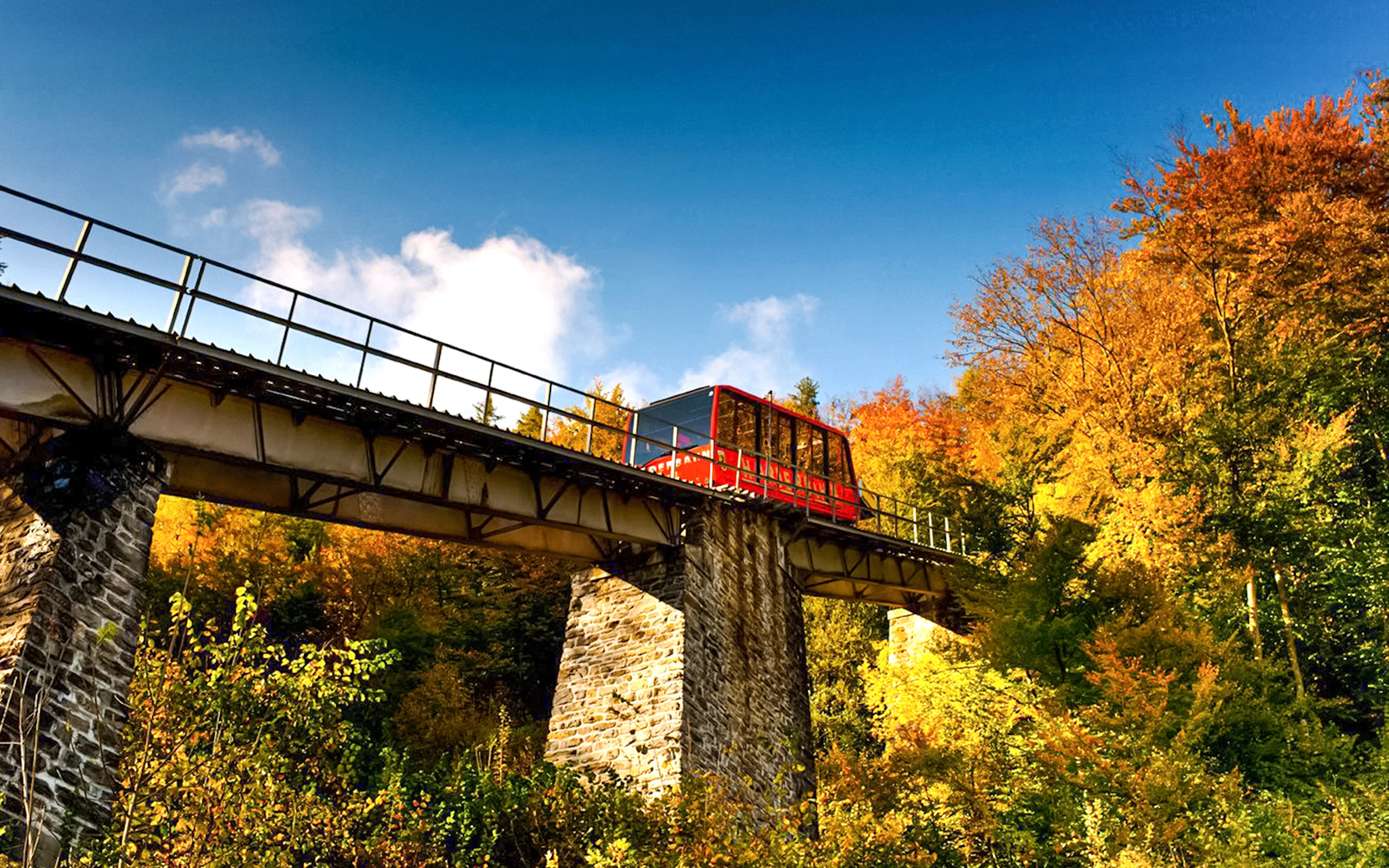
Harder funicular ride
The 8–10-minute ascent is part of the experience, not just transport. The line climbs steeply through the forest and opens the view quickly, which is why even short visits feel satisfying.
Two Lakes Bridge viewpoint
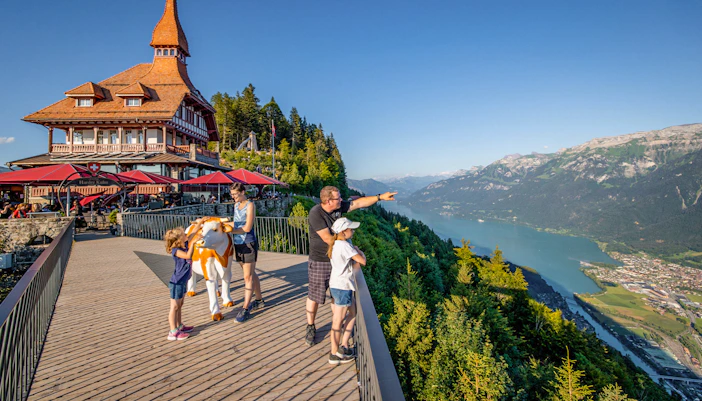
Walk about five minutes from the summit station to the signature platform. This is the classic photo angle: Lake Thun on one side, Lake Brienz on the other, with Interlaken centered below.
Bernese Alps skyline
In clear weather, this is where the Eiger, Mönch, and Jungfrau earn their reputation. Early and late light photographs best; midday tends to flatten the ridges and crowd the railing.
Panorama restaurant terrace
If you want Harder Kulm to feel like an outing rather than a photo stop, sit here. The terrace turns the same panorama into lunch, dinner, or sunset timing without needing a separate activity.
Panorama playground
Families can stretch the stop without overcomplicating it. The playground sits near the summit core, so adults still keep the view in sight while children get something more tactile than a railing and camera pause.
Harder Kulm circular route
This short walking loop adds forest shade and changing lake angles to an otherwise compact summit. Budget about an hour, and only add it if the weather is stable and your shoes can handle a trail.
How to explore Harder Kulm
Time to spend
Budget 45–90 minutes for the essential visit: the walk from Interlaken Ost, the 8–10-minute ride up, the short walk to the viewpoint, photos, and the descent. Allow 2–3 hours if you want lunch or dinner, sunset, or the circular trail. Peak-time queues can stretch the stop.
Best visit order
Start at Interlaken Ost, where you can sort bathrooms, snacks, or lockers before walking to the Harder Railway valley station. At the top, go straight to the Two Lakes Bridge first, then settle into the restaurant, playground, or walking loop.
Must-see highlights
Must-see: the funicular ride, the Two Lakes Bridge, and the twin-lake panorama toward the Eiger, Mönch, and Jungfrau. Optional: the panorama restaurant and circular summit trail, which add 45–60 minutes and make the stop feel less rushed.
Worth adding nearby
Lake Thun or Lake Brienz cruises fit naturally if you want a fuller scenic day, and a multi-stop regional plan is where the Jungfrau Unlimited Travel Pass: Choose 3 to 8 Days starts to make more sense than a one-off mountain ride.
Guided or self-paced?
Self-paced is the better fit for most visitors because the summit is compact and the attraction is visual rather than explanation-heavy. A guide is more useful in a broader regional itinerary than on Harder Kulm itself. If this is your main stop, Harder Kulm Round-Trip Funicular Tickets are enough. If you are stacking several Jungfrau region rides, the Jungfrau Unlimited Travel Pass gives better overall value.
Brief history of Harder Kulm
- 1890: The federal concession for an electric funicular to Harder Kulm is granted, formalizing plans for a scenic railway above Interlaken.
- 1905: Construction begins on the line, conceived as an excursion route rather than a straight transport link.
- 1907: The track reaches the summit, completing the core engineering of the mountain railway.
- 1908: The funicular and summit restaurant open in mid-May, turning Harder Kulm into an easy panorama stop for visitors.
- 2008: For the railway’s centenary, the 1966 carriages are replaced with updated cars while the heritage route remains intact.
- 2025: Harderbahn AG is merged into Top of Interlaken AG, aligning the attraction more closely with the wider Jungfrau Railways network.
Architecture of Harder Kulm summit station
Harder Kulm is designed less as a monument and more as a carefully staged viewpoint. The experience begins with the railway itself: a short, steep heritage funicular that climbs about 755 m (2,477 ft) of elevation in roughly 1.45 km (0.9 mi), so the shift from town to forest to open panorama feels abrupt and theatrical. One of the smartest design choices is easy to miss: the track was laid on a curve rather than straight up the slope, reducing its visual impact from Interlaken below. At the top, the summit stays compact and legible. A short walk leads directly to the projecting Two Lakes Bridge, which frames the view instead of scattering you across a large mountaintop.
Who built it?
Harder Kulm was conceived as a scenic excursion railway above Interlaken, not a transport utility. Its federal concession was granted in 1890, construction began in 1905, and the railway with summit restaurant opened in 1908. No single architect dominates the story; the defining vision was engineering a low-visual-impact route to a dramatic lookout.
Why the two-lake view is unique
Interlaken gets its name from its setting between lakes, but from street level you never fully understand that geography. Harder Kulm is where it becomes legible. Few viewpoints around town show Lake Thun, Lake Brienz, the strip of settlement between them, and the Bernese trio in one glance. That is why this outlook appears so often on postcards and first-time itineraries: it is not just scenic, it explains the landscape. You come away with a much clearer sense of how Interlaken sits inside the wider Jungfrau region.
Frequently asked questions about Harder Kulm
You can drive into Interlaken, but not up to the summit. There is no parking at the Harder Railway valley station, so drivers usually park in town or near Interlaken Ost and walk over.
Not completely. Prebooking removes the ticket-office purchase step, which helps on busy days, but it does not create a separate boarding lane. In clear-weather afternoons and around sunset, the real delay is usually funicular capacity.
No. The valley station is basic, so use the bathrooms, snack options, and luggage storage at Interlaken Ost before heading across. That small bit of planning makes the visit noticeably smoother.
Yes, and active travelers often do. It is a smart way to get more value from the outing, but the trails are steep enough to punish weak footwear and can feel harder on the knees going down.
Choose the reduced-fare option, not the standard ticket. Discounted Harder Kulm Tickets for Swiss Pass / Half Fare Card Owners are meant for travelers who already hold the qualifying pass and want the same ride for less.
The funicular itself is accessible, and families generally find the outing easy to manage. Still, plan for a short walk from the summit station to the main viewpoint, and expect a compact mountain setting rather than fully urban infrastructure.
Only sometimes. Passing cloud can add atmosphere, but low cloud or dense fog removes the main reason to come, which is the panorama. Harder Kulm works best when you can book around a clearer weather window.
Yes, if you are planning several rides over multiple days. Jungfrau Unlimited Travel Pass is the more logical upgrade once Harder Kulm becomes one stop in a broader regional itinerary.